
Vacuum-insulated glass is the latest breakthrough in windows and frames, delivering outstanding thermal and acoustic performance with an ultra-slim glass profile.
- What’s the difference between traditional glazing and vacuum-insulated glazing?
- What are the benefits?
- What type of frame is used when working with vacuum-insulated glass?
- Unique features of vacuum-insulated glass
- Key characteristics of vacuum-insulated glass
What’s the difference between traditional glazing and vacuum-insulated glazing?
In a traditional double-glazed unit, the cavity between the glass panes is filled with dried air or an insulating gas such as argon or krypton. This new system, however, features a vacuum gap of just 0.2 mm between the panes—completely free of air or gas. In other words, two glass sheets, each 3 to 6 mm thick (one coated with a high-performance insulating layer), are separated by this vacuum space, created by extracting the air. Tiny, almost invisible cylindrical micro-spacers are distributed within the gap to prevent the panes from touching under external pressure. The entire assembly is less than 1 cm thick!
What are the benefits?
Thermal and acoustic performance
Vacuum-insulated glass delivers thermal insulation performance equal to or better than the most advanced triple-glazed units—yet with only a quarter of the thickness and two-thirds of the weight. Even a minimal vacuum is far more effective at limiting heat loss through conduction and convection, which means the gap between two panes can be reduced to just 0.2 mm. At the same time, it enhances soundproofing and allows greater light transmission.
Enhanced aesthetic appeal
The reduced thickness of the glass also allows for slimmer frames, resulting in windows that are lighter both in weight and in visual impact.
Applications
Suitable for both new constructions—commercial or residential—vacuum-insulated glass is also the ideal choice for historic buildings, where windows often need to be replaced while preserving their original appearance.
Sustainability
The materials used for vacuum-insulated glass are eco-friendly, lead-free, and 100% recyclable.
Lower weight and thickness
With the same level of thermal performance, vacuum-insulated glass is three to four times thinner than traditional triple glazing and up to 40% lighter. This also broadens the range of standard accessories that can be used.
Greater brightness
Being so thin, vacuum-insulated glass provides superior light transmission, letting in up to 15% more natural daylight compared to triple glazing. This also means greater free solar heat gain inside the building, resulting in significant energy savings.
What type of frame is used when working with vacuum-insulated glass?
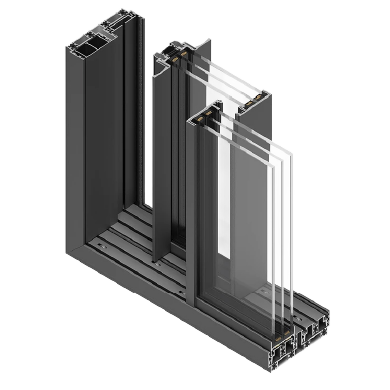
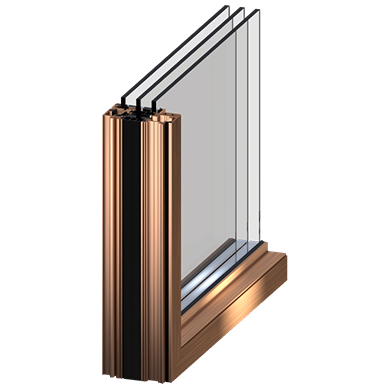
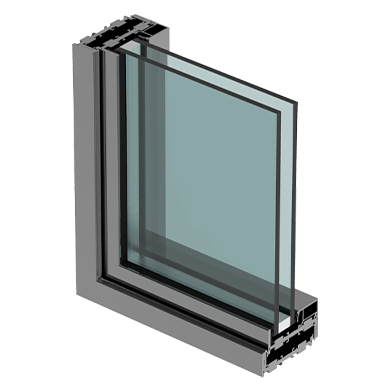
The frame used with vacuum-insulated glass must be designed to maximize its advantages. It should therefore be slim and compact in profile to complement the glass’s lightweight nature, and manufactured with a thermal break to reinforce its insulating performance.
Unique features of vacuum-insulated glass
- Micro-spacers: placed 20 mm apart, these spacers are visible to the naked eye when viewed up close, but they are essential to ensuring the integrity of the vacuum.
- Glass dimensions: depending on the manufacturer, the average maximum size is around 1.5 x 2.5 meters. These dimensions will certainly increase as the technology continues to evolve.
Key characteristics of vacuum-insulated glass
- Exceptional thermal performance
- Prestazione acustiche buone
- Better light transmittance
- Reduced weight
- Micro spacers visible at close range